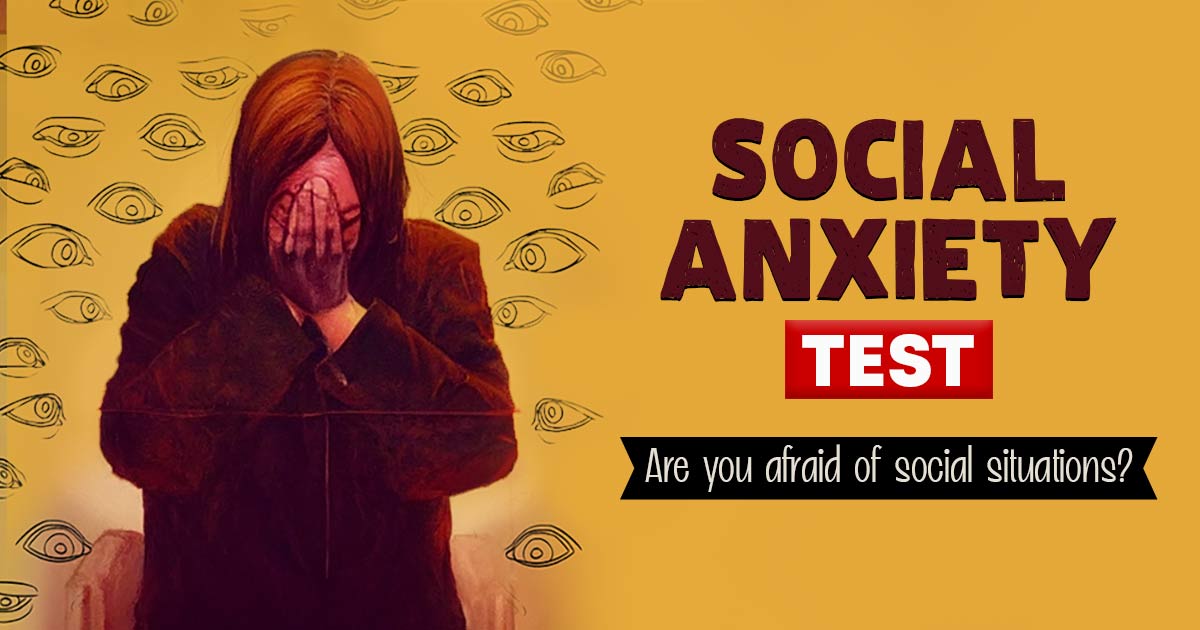
Do you feel nervous and tense in social situations? Do you tend to avoid social situations because of the fear of getting humiliated or criticized by others? Do you feel worried when performing in public? Or, do you try remaining quiet in any social situation? Take this online Social Anxiety Test to know whether you have signs of social anxiety or not.
What Is Social Anxiety?
Social anxiety is a type of anxiety disorder that causes a person to experience excessive fear, nervousness, and self-consciousness in social situations. People with social anxiety may feel intense anxiety and fear in situations where they are the center of attention, such as giving a speech, meeting new people, or attending social events.
This anxiety can be so severe that it interferes with a person’s ability to function normally in daily life, and as a result of that, they may tend to avoid social situations altogether.
Common symptoms of social anxiety include:
Feeling as though other people are always watching or judging them
Worrying excessively before and after social events
Avoiding social situations with a fear of getting criticized or humiliated by others
Difficulty making eye contact or speaking in public
Difficulty starting or maintaining conversations with other people
Disclaimer: If these symptoms cause clinically significant distress or impairment in social, occupational, or other important areas of functioning, and last for at least 6 months or longer, it might be considered a disorder.
Below is a list of statements related to the common signs of social anxiety. Please read each statement carefully and rate the extent to which these are relevant to you.
Please note: This Social Anxiety Test is a self-assessment and not a diagnostic test.
Time limit: 0
Quiz Summary
0 of 15 Questions completed
Questions:
Information
You have already completed the quiz before. Hence you can not start it again.
Your score indicates that you have a low sign of social anxiety. It is evident from your score that you might slightly feel nervous and tense in social situations and might also try to avoid a few social situations where you might not know people very well. Besides this, it can also be seen from your response that to a few extents, you might experience a few physical symptoms such as sweating, shaking, and rapid heartbeat in various social situations where you might have to perform in public. Also, your score reflects that you might find it a little difficult to initiate or maintain a conversation with others.
Further, your score seems that in a few cases, you might have trouble making eye contact with others while speaking in public and also might make a few analyses of your past social interactions and may feel embarrassed thinking about them. However, it should be noted that these signs would have a chance to impact your social, occupational, personal, and other areas of functioning in life.
Want to learn more?
Some strategies can be used to manage an individual’s signs of social anxiety, such as talking to friends or family members or joining a support group, which can help individuals feel less alone and help to learn how to talk assertively, beside this engaging in a healthy diet, getting enough sleep, and reducing alcohol and caffeine consumption, regular exercise to help reduce social anxiety by increasing the body’s production of endorphins, by practicing mindfulness techniques such as meditation or yoga to regulate body’s response to social anxiety, and developing specific social skills, such as how to start and maintain conversations, and practicing them in a safe and supportive environment. If you want to know more about how to overcome your signs of social anxiety, talk to our professional psychologists.
You can use our Mood Tracker to stay mindful of your mood every day, and identify your innermost thoughts & emotions on a daily basis. It will help you in doing the things you love while limiting activities that might dampen your mood.
Moderate Sign Of Social Anxiety
Your score indicates that you have a moderate sign of social anxiety. It is evident from your score that sometimes you might feel nervous and tense in social situations and often might also try to avoid social situations where you might not know people very well. Besides this, it can also be seen from your response that to some extent, you might experience physical symptoms such as sweating, shaking, and rapid heartbeat in various social situations where you might have to perform in public. Also, your score reflects that you might find some difficulties initiating or maintaining a conversation with others.
Further, your score seems that in some cases, you might have trouble making eye contact with others while speaking in public and also might engage in making some analyses regarding your past social interactions and may also feel embarrassed thinking about them. However, it should be noted that these signs would have a chance to impact some of your social, occupational, personal, and other areas of functioning in life.
Want to learn more?
Some strategies can be used to manage an individual’s signs of social anxiety, such as talking to friends or family members or joining a support group, which can help individuals feel less alone and help to learn how to talk assertively, beside this engaging in a healthy diet, getting enough sleep, and reducing alcohol and caffeine consumption, regular exercise to help reduce social anxiety by increasing the body’s production of endorphins, by practicing mindfulness techniques such as meditation or yoga to regulate body’s response to social anxiety, and developing specific social skills, such as how to start and maintain conversations, and practicing them in a safe and supportive environment. If you want to know more about how to overcome your signs of social anxiety, talk to our professional psychologists.
You can use our Mood Tracker to stay mindful of your mood every day, and identify your innermost thoughts & emotions on a daily basis. It will help you in doing the things you love while limiting activities that might dampen your mood.
High Sign Of Social Anxiety
Your score indicates that you have a high sign of social anxiety. It is evident from your score that in most cases you seem to feel nervous and tense in social situations and most often seem to avoid social situations where you might not know people very well. Besides this, it can also be seen from your response that in most possible cases, you seem to experience strong physical symptoms such as sweating, shaking, and rapid heartbeat where you might have to perform in public. Also, your score reflects that you seem to find it strongly difficult to initiate or maintain a conversation with others.
Further, your score seems that in most cases, you seem to have trouble making eye contact with others while speaking in public and also seem to engage in making strong analyses regarding your past social interactions and seem to feel strongly embarrassed thinking about them. However, it should be noted that these signs would have a chance to strongly impact your social, occupational, personal, and other areas of functioning in life.
Want to learn more?
Some strategies can be used to manage an individual’s signs of social anxiety, such as talking to friends or family members or joining a support group, which can help individuals feel less alone and help to learn how to talk assertively, beside this engaging in a healthy diet, getting enough sleep, and reducing alcohol and caffeine consumption, regular exercise to help reduce social anxiety by increasing the body’s production of endorphins, by practicing mindfulness techniques such as meditation or yoga to regulate body’s response to social anxiety, and developing specific social skills, such as how to start and maintain conversations, and practicing them in a safe and supportive environment. If you want to know more about how to overcome your signs of social anxiety, talk to our professional psychologists.
You can use our Mood Tracker to stay mindful of your mood every day, and identify your innermost thoughts & emotions on a daily basis. It will help you in doing the things you love while limiting activities that might dampen your mood.