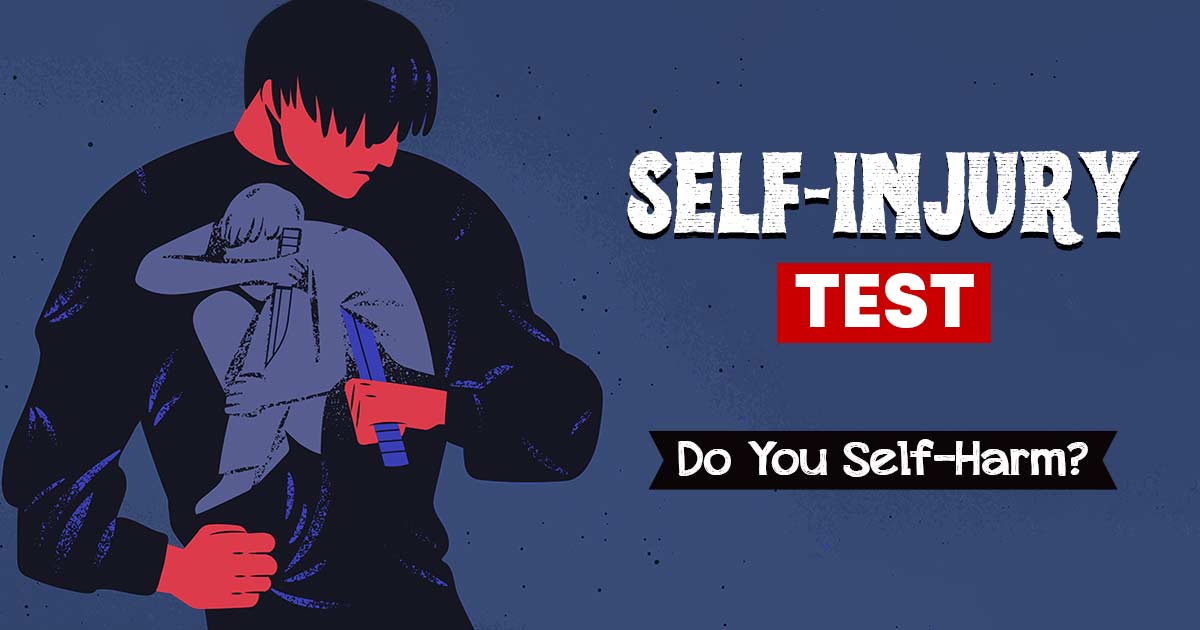
Do you feel the urge to harm yourself during a stressful condition? Do you feel satisfied and relieved after hurting yourself physically? Do you think that your problems would get resolved by your self-harming? Or, do you try to stop this self-harming behavior but feel an inability to do so? Take this self-harm test to know about self-harming behavior.
What Is self-Harm?
Self-injury, also known as self-harm, or self-mutilation, is defined as an intentional injury to one’s own body which usually leaves marks or causes tissue damage. The most common form of self-harm is skin cutting, head banging, hitting, and burning.
People mostly self-harm to express or cope with emotional distress and to relieve unbearable tension. A few signs of the behavior related to self-injury are:
One or several unexplained injuries in different areas of the body
Hiding potentially dangerous objects from known places, such as razor blades or cigarette lighters
Drastic mood swings and feelings of low self-esteem
Avoiding dresses and activities which expose the body, such as swimming
Less involvement in social interaction and activities at home, school, or work
Below is a list of items that relate to an individual’s tendency to self-injury. Please read each item carefully, and select options that you find relevant for you.
Please note: This self-harm test is a self-assessment and not a diagnostic test.
Time limit: 0
Quiz Summary
0 of 15 Questions completed
Questions:
Information
You have already completed the quiz before. Hence you can not start it again.
Your present score reveals that you have a low sign of self-injurious behavior. It indicates that to a few extent you may feel an urge to self-harm yourself to get out of any possible stressful condition or maybe to relieve yourself from the ongoing emotional pain. Besides this your score reveals that in a few cases when you may feel hopeless, helpless, and worthless find a way to relieve distress by harming yourself physically. Apart from this, it can also be seen from your response that you may like to hide your marks of injury to a few extents from others and may like to give some other explanation for the case.
Your response also shows that to a few extent you may feel that engaging in self-harming behavior may possibly give a solution to your problems and which might also make your family members and friends a little worried thinking about your health consequences and well-being of life. However, it should be noted that your responses may have an impact on your social, occupational, and other areas of functioning. if you think the results do not accurately match your characteristics, then we would encourage you to consult a Psychologist for an accurate result.
Want to learn more?
Self-injurious behavior can be most commonly treated through psychotherapy, which involves identifying and managing underlying issues that trigger self-injury, along with helping the person to learn skills to better manage distress, intense emotions, supporting to boost self-image, improving relationships, social skills and finally helping to learn healthy problem-solving skills. If you want to know how to overcome your self-injurious behavior, talk to our professional psychologists.
You can use our Mood Tracker to stay mindful of your mood every day, identify your innermost thoughts & emotions on a daily basis. It will aid you in doing all those things you love, while limiting activities that might dampen your mood.
Moderate Signs Of Self-injury
Your present score reveals that you have a moderate sign of self-injurious behavior. It indicates that to some extent you may feel the urge to self-harm yourself to get out of some stressful condition or maybe to relieve yourself from the ongoing emotional pain. Besides this your score reveals that sometimes when you might feel hopeless, helpless, and worthless find a way to relieve distress by harming yourself physically in those cases. Apart from this, it can also be seen from your response that in some cases you may like to hide your marks of injury from others and may like to give some other explanation for those cases.
Your response also shows that in some cases you may feel that engaging in self-harming behavior may possibly give a solution to your problems and which might also make your family members and friends somewhat very worried and embarrassed thinking about your health consequences and well-being of life. However, it should be noted that your responses may have an impact on your social, occupational, and other areas of functioning. if you think the results do not accurately match your characteristics, then we would encourage you to consult a Psychologist for an accurate result.
Want to learn more?
Self-injurious behavior can be most commonly treated through psychotherapy, which involves identifying and managing underlying issues that trigger self-injury, along with helping the person to learn skills to better manage distress, intense emotions, supporting to boost self-image, improving relationships, social skills and finally helping to learn healthy problem-solving skills. If you want to know how to overcome your self-injurious behavior, talk to our professional psychologists.
You can use our Mood Tracker to stay mindful of your mood every day, identify your innermost thoughts & emotions on a daily basis. It will aid you in doing all those things you love, while limiting activities that might dampen your mood.
High Signs Of Self-injury
Your present score reveals that you have a high sign of self-injurious behavior. It indicates that you may feel the urge to self-harm most of the time to get out of your stressful conditions or seem to relieve yourself from the ongoing emotional pain. Besides this your score reveals that in most cases when you seem to feel hopeless, helpless, and worthless, find a way to relieve distress by harming yourself physically in almost all those cases. Apart from this, it can also be seen from your response that mostly you seem to like to hide your marks of injury from others and most often like to give other explanations for those cases.
Your response also shows that in most cases you seem to feel that engaging in self-harming behavior may possibly give a solution to your problems and which also seems to make your family members and friends worried, embarrassed, puzzled almost all the time thinking about your health consequences and well-being of life. However, it should be noted that your responses may have an impact on your social, occupational, and other areas of functioning. if you think the results do not accurately match your characteristics, then we would encourage you to consult a Psychologist for an accurate result.
Want to learn more?
Self-injurious behavior can be most commonly treated through psychotherapy, which involves identifying and managing underlying issues that trigger self-injury, along with helping the person to learn skills to better manage distress, intense emotions, supporting to boost self-image, improving relationships, social skills and finally helping to learn healthy problem-solving skills. If you want to know how to overcome your self-injurious behavior, talk to our professional psychologists.
You can use our Mood Tracker to stay mindful of your mood every day, identify your innermost thoughts & emotions on a daily basis. It will aid you in doing all those things you love, while limiting activities that might dampen your mood.