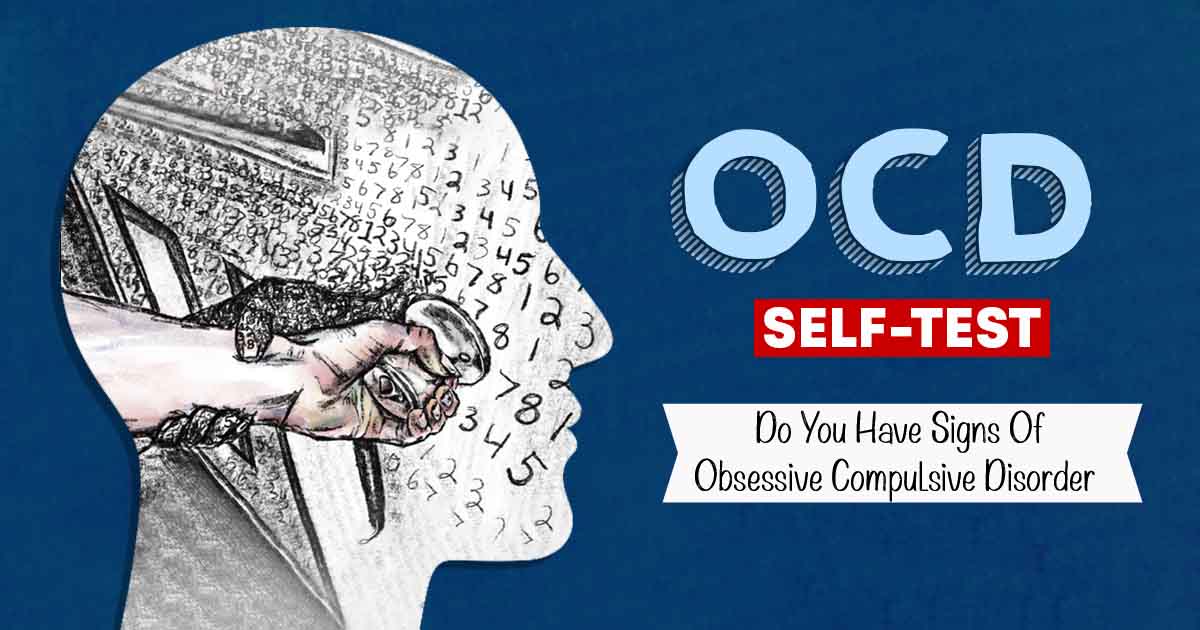
Do you experience repetitive and negative unwanted thoughts that make it difficult to get rid of them? Do you feel the need to engage in repetitive behaviors, such as repeatedly washing hands, or checking door locks? Or, have you tried stopping these behaviors but couldn’t manage to do so? Take this online OCD test to know whether you have signs of OCD or not.
What Is Obsessive Compulsive Disorder(OCD)?
Obsessive-compulsive disorder (OCD) is a mental health condition that affects people from diverse backgrounds and age groups. It arises when an individual becomes stuck in a recurring pattern of obsessions and compulsions. Obsessions refer to unwanted and intrusive thoughts, images, or impulses that trigger intense anxiety and distress.
On the other hand, compulsions are repetitive behaviors or mental acts that an individual engages in to alleviate the discomfort caused by the obsessions. Although many people experience obsessive thoughts or compulsive behaviors at some point in their lives, this does not imply that everyone has OCD.
The diagnosis of OCD is reserved for cases in which the cycle of obsessions and compulsions is particularly severe, taking up a significant amount of time (over an hour per day), causing profound distress, or interfering with social, occupational, and personal functioning of life.
Some common symptoms of OCD include:
Intrusive and unwanted thoughts, images, or urges that cause distress
Repetitive behaviors or mental acts that are performed in response to the obsessions
Avoiding situations or objects that trigger obsessions
Feelings of anxiety, guilt, or shame associated with the obsessions and compulsions
A strong need for order, neatness, symmetry or perfection
Disclaimer: If these symptoms cause clinically significant distress or impairment in social, occupational, or other important areas of functioning, and last for at least 2 successive weeks or longer, it might be considered a disorder.
Below is a list of statements that commonly relate to individuals who have symptoms of Obsession and Compulsion. Please read each statement carefully and please indicate the option that best describes you.
Please note: This OCD test is a self-assessment and not a diagnostic test.
Time limit: 0
Quiz Summary
0 of 15 Questions completed
Questions:
Information
You have already completed the quiz before. Hence you can not start it again.
Your score indicates that you have a low sign of OCD. It is evident from your score that you might be slightly experiencing repetitive, unwanted thoughts in your mind and not able to get them out of your mind. Further, your score seems that in a few cases, you may feel the need to engage in repetitive behavior, such as hand washing, checking, counting, or praying. Besides this, your response indicates that you might feel upset in a few cases when other people change the arrangements that you made and might feel a few difficulties to throw away things that might not be required anymore.
Also, it might be indicated from your response that a few times, you might have violent thoughts and urges which might seem to be unavoidable for you. However, it should be noted that these signs would have a chance to impact your social, occupational, personal, and other areas of functioning in life. However, it should be noted that these signs would have a chance to impact your social, occupational, personal, and other areas of functioning in life.
Want to learn more?
Some strategies can be used to manage an individual’s signs of OCD, such as adopting a healthy lifestyle, such as identifying the situations, objects, or thoughts that trigger obsessive-compulsive symptoms, using techniques applied in CBT to challenge negative and irrational thoughts, getting regular exercise, eating a nutritious diet, and getting enough sleep, practices such as meditation, deep breathing, or yoga, talking to friends or family members, or joining a support group, which altogether can help individuals feel less alone, and staying engaged in activities that an individual enjoys and finds meaningful. If you want to know how to overcome your signs of obsession and compulsion, talk to our professional psychologists.
You can use our Mood Tracker to stay mindful of your mood every day, and identify your innermost thoughts & emotions on a daily basis. It will help you in doing the things you love while limiting activities that might dampen your mood.
Moderate Sign Of OCD
Your score indicates that you have a moderate sign of OCD. It is evident from your score that sometimes you might experience repetitive, unwanted thoughts in your mind and often finds an inability to get them out of your mind. Further, your score seems that in some cases, you may feel the need to engage in repetitive behavior, such as hand washing, checking, counting, or praying.
Besides this, your response indicates that you might feel upset in some cases when other people change the arrangements that you made and might often feel difficulty to throw away things that might not be required anymore. Also, it might be indicated from your response that sometimes, you might have violent thoughts and urges that you try not to think about but find unavoidable for you to do so. However, it should be noted that these signs would have a chance to impact some of your social, occupational, personal, and other areas of functioning in life.
Want to learn more?
Some strategies can be used to manage an individual’s signs of OCD, such as adopting a healthy lifestyle, such as identifying the situations, objects, or thoughts that trigger obsessive-compulsive symptoms, using techniques applied in CBT to challenge negative and irrational thoughts, getting regular exercise, eating a nutritious diet, and getting enough sleep, practices such as meditation, deep breathing, or yoga, talking to friends or family members, or joining a support group, which altogether can help individuals feel less alone, and staying engaged in activities that an individual enjoys and finds meaningful. If you want to know how to overcome your signs of obsession and compulsion, talk to our professional psychologists.
You can use our Mood Tracker to stay mindful of your mood every day, and identify your innermost thoughts & emotions on a daily basis. It will help you in doing the things you love while limiting activities that might dampen your mood.
High Sign Of OCD
Your score indicates that you have a high sign of OCD. It is evident from your score that in most cases you seem to experience repetitive, unwanted thoughts in your mind and mostly find an inability to get them out of your mind. Further, your score seems that in most cases, you seem to feel the need to engage in repetitive behavior, such as hand washing, checking, counting, or praying.
Besides this, your response indicates that you seem to feel very upset in most cases when other people change the arrangements that you made and feel strong difficulties to throw away things that might not be required anymore. Also, it might be indicated from your response that in many cases, you might have violent thoughts and urges that you may try not to think about but find very disturbing and unavoidable for you to do so. However, it should be noted that these signs would have a chance to strongly impact your social, occupational, personal, and other areas of functioning in life.
Want to learn more?
Some strategies can be used to manage an individual’s signs of OCD, such as adopting a healthy lifestyle, such as identifying the situations, objects, or thoughts that trigger obsessive-compulsive symptoms, using techniques applied in CBT to challenge negative and irrational thoughts, getting regular exercise, eating a nutritious diet, and getting enough sleep, practices such as meditation, deep breathing, or yoga, talking to friends or family members, or joining a support group, which altogether can help individuals feel less alone, and staying engaged in activities that an individual enjoys and finds meaningful. If you want to know how to overcome your signs of obsession and compulsion, talk to our professional psychologists.
You can use our Mood Tracker to stay mindful of your mood every day, and identify your innermost thoughts & emotions on a daily basis. It will help you in doing the things you love while limiting activities that might dampen your mood.