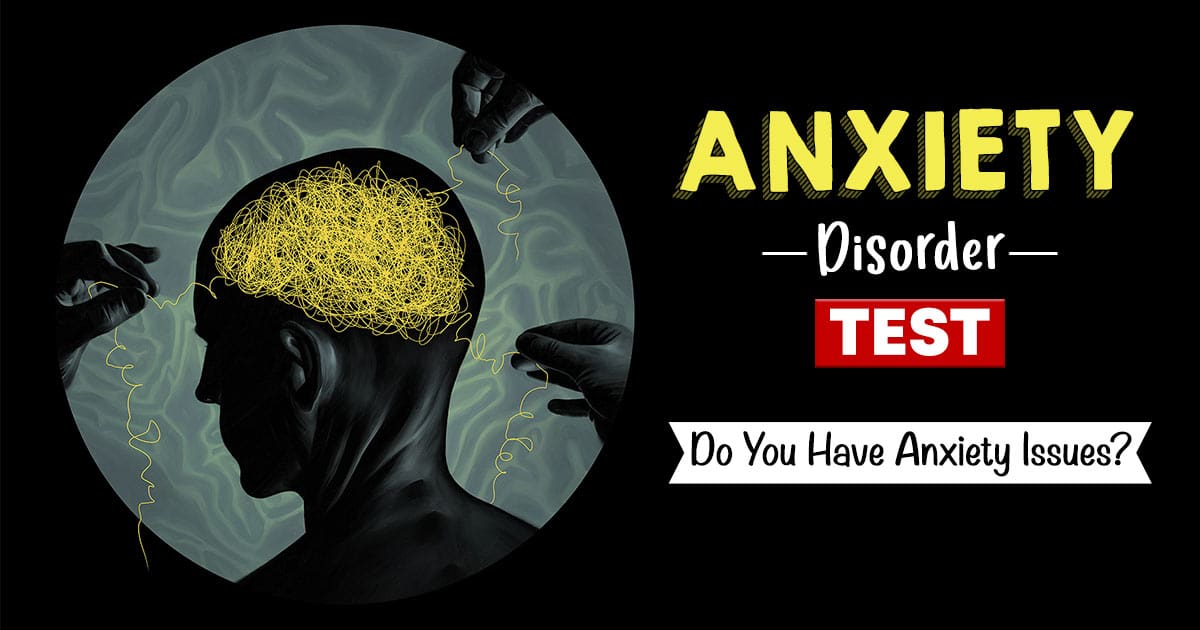
Do you feel tense, worried, or nervous for some unknown reason? Do you tend to experience sweating, shaking, heart palpitation, restlessness, and breathing troubles when getting nervous and tense?
Do you avoid certain situations that make you feel nervous? Or, do you try to control your anxiety? Take this Anxiety Disorder Test to know whether you have signs of anxiety Disorder or not.
What Is Anxiety Disorder?
Anxiety Disorder is a mental health condition characterized by a feeling of consistent uneasiness, nervousness, or apprehended irrational fear for some specific or no reason. General anxiety can be a normal response to stress, but when it takes the form of a mental health disorder, can range in intensity from mild to severe and can interfere with daily activities, relationships, and overall quality of life.
Anxiety can be caused by a variety of factors, including genetics, brain chemistry, life experiences, and environmental stressors. Symptoms of anxiety can be categorized into emotional, cognitive, and physical symptoms.
Some common symptoms of anxiety disorder may include:
Constant worries or fears
Repeated Racing thoughts
Difficulty making decisions
Increased heart rate
Shortness of breath or feeling of suffocation
Disclaimer: If these symptoms cause clinically significant distress or impairment in social, occupational, or other important areas of functioning, and last for at least 6 months or longer, it might be considered a disorder.
Instructions For Taking Anxiety Disorder TestOnline
Below is a list of statements related to the common signs of anxiety. Please read each statement carefully and rate the extent to which these are relevant to you.
Please note: This anxiety disorder test is a self-assessment and not a diagnostic test
Time limit: 0
Quiz Summary
0 of 15 Questions completed
Questions:
Information
You have already completed the quiz before. Hence you can not start it again.
Your score indicates that you have a low sign of anxiety disorder. It is evident from your score that you might slightly feel tensed, worried, or nervous to a few extent for some unknown reason. Further, your score seems that in a few cases, you might also engage in overthinking in different situations and might face a few difficulties in making decisions.
Also, your score reflects that to a few extents you might find it difficult to relax or sleep and might experience a few physical symptoms such as sweating, shaking, palpitations, and restlessness when getting tensed and nervous. Besides this, your response indicates that you might miss out on opportunities a few times because of your worries and might feel a few difficulties enjoying day-to-day life because of your anxiety. However, it should be noted that these signs would have a chance to impact your social, occupational, personal, and other areas of functioning in life.
Want to learn more?
Some strategies can be used to manage an individual’s signs of anxiety, such as avoiding situations or activities that trigger the negative feelings, talking to friends or family members, or joining a support group, which can help individuals feel less alone, eating a healthy diet, getting enough sleep, and reducing alcohol and caffeine consumption, regular exercise can help reduce anxiety by increasing the body’s production of endorphins and also by practicing mindfulness techniques such as meditation or yoga, and slow, deep breaths can help regulate the body’s response to anxiety. If you want to know how to overcome your signs of anxiety, talk to our professional psychologists.
You can use our Mood Tracker to stay mindful of your mood every day, and identify your innermost thoughts & emotions on a daily basis. It will help you in doing the things you love while limiting activities that might dampen your mood.
Moderate Sign Of Anxiety
Your score indicates that you have a moderate sign of anxiety disorder. It is evident from your score that you might somewhat feel tensed, worried, or nervous in some situations for some unknown reason. Further, your score seems that in some cases, you might also engage in overthinking in different situations and might often face difficulties in making decisions.
Also, your score reflects that in some cases you might find it difficult to relax or sleep and might often experience physical symptoms such as sweating, shaking, palpitations, and restlessness when getting tensed and nervous. Besides this, your response indicates that you might miss out on opportunities sometimes because of your worries and might often feel difficulties enjoying day-to-day life because of your anxiety. However, it should be noted that these signs would have a chance to impact your social, occupational, personal, and other areas of functioning in life.
Want to learn more?
Some strategies can be used to manage an individual’s signs of anxiety, such as avoiding situations or activities that trigger the negative feelings, talking to friends or family members, or joining a support group, which can help individuals feel less alone, eating a healthy diet, getting enough sleep, and reducing alcohol and caffeine consumption, regular exercise can help reduce anxiety by increasing the body’s production of endorphins and also by practicing mindfulness techniques such as meditation or yoga, and slow, deep breaths can help regulate the body’s response to anxiety. If you want to know how to overcome your signs of anxiety, talk to our professional psychologists.
You can use our Mood Tracker to stay mindful of your mood every day, and identify your innermost thoughts & emotions on a daily basis. It will help you in doing the things you love while limiting activities that might dampen your mood.
High Sign Of Anxiety
Your score indicates that you have a high sign of anxiety disorder. It is evident from your score that in most cases you seem to feel tense, worried, or nervous for some unknown reason. Further, your score seems that in almost every case, you seem to engage in overthinking in different situations and most often seem to face difficulties in making decisions.
Also, your score reflects that in most cases you might find it extremely difficult to relax or sleep and strongly seem to experience physical symptoms such as sweating, shaking, palpitations, and restlessness when getting tensed and nervous. Besides this, your response indicates that you seem to miss out on opportunities in so many cases because of your worries and seem to strongly experience difficulties enjoying day-to-day life because of your anxiety. However, it should be noted that these signs would have a chance to strongly impact your social, occupational, personal, and other areas of functioning in life.
Want to learn more?
Some strategies can be used to manage an individual’s signs of anxiety, such as avoiding situations or activities that trigger the negative feelings, talking to friends or family members, or joining a support group, which can help individuals feel less alone, eating a healthy diet, getting enough sleep, and reducing alcohol and caffeine consumption, regular exercise can help reduce anxiety by increasing the body’s production of endorphins and also by practicing mindfulness techniques such as meditation or yoga, and slow, deep breaths can help regulate the body’s response to anxiety. If you want to know how to overcome your signs of anxiety, talk to our professional psychologists.
You can use our Mood Tracker to stay mindful of your mood every day, and identify your innermost thoughts & emotions on a daily basis. It will help you in doing the things you love while limiting activities that might dampen your mood.